

Types of Sand Core Materials
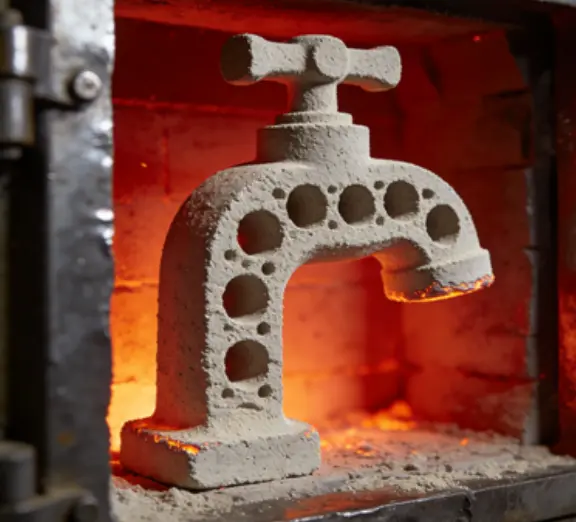
In casting processes, many manufacturers focus on machines, molds, and casting methods, but sand core materials are equally critical to internal casting quality.
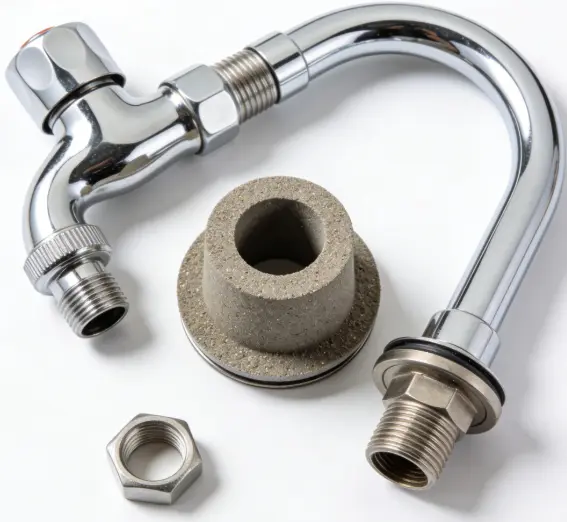
Especially for hollow brass components such as faucets, water meter housings, and valves, selecting the right sand core material is essential for consistent quality.
1.Why Are Sand Core Materials Important?
Sand core materials directly affect:
- Internal dimensional accuracy
- Internal surface finish
- Resistance to molten metal erosion
- Ease of core removal
- Casting yield rate
For brass, which has a relatively high melting temperature and strong fluidity, sand core material selection is especially critical.
2.Common Types of Sand Core Materials
Several sand core materials are commonly used in modern foundries:
(1)Silica Sand Cores
Silica sand is the most widely used sand core material in casting.
Features:
- Low cost
- Widely available
- Versatile applications
Applications:
- Standard brass castings
- Gravity casting
(2)Resin Sand Cores
Resin sand cores use resin binders, providing higher strength and better dimensional stability.
Features:
- High strength
- Excellent dimensional accuracy
- Suitable for complex cavities
Applications:
- Brass faucets
- Water meter housings
- Low pressure casting
(3)Shell Sand Cores
Shell sand cores are made from coated sand, offering superior surface finish.
Features:
- Smooth surface finish
- Consistent dimensions
- Ideal for high-quality castings
Applications:
- Premium faucet castings
- Precision brass components
(4)Cold Box Sand Cores
Cold box sand cores are widely used in automated casting production.
Features:
- Fast core making
- High mechanical strength
- Ideal for automatic core shooting machines
Applications:
- Automated production lines
- Mass production of brass faucets
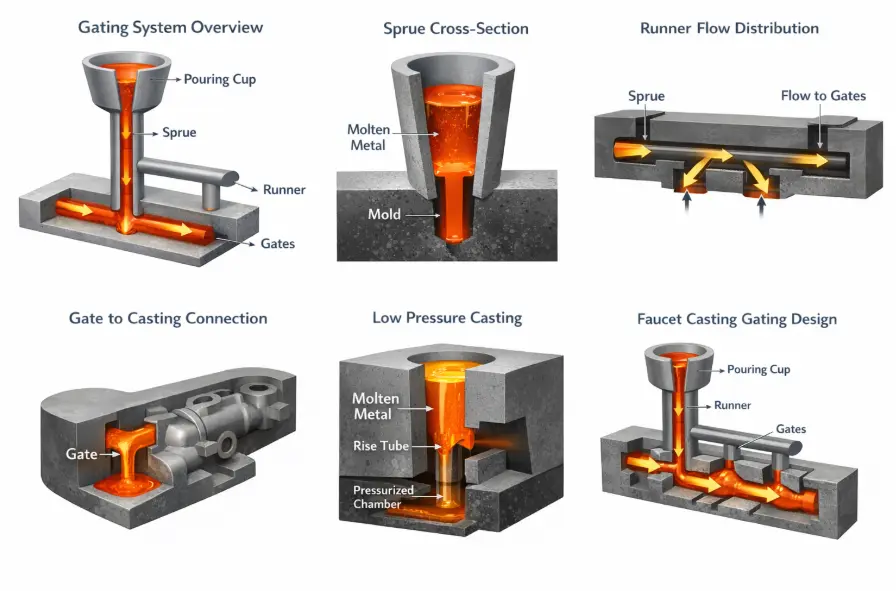
3.Sand Core Materials in Low Pressure & Gravity Casting
Low Pressure Casting:
- Higher strength and stability required
- Resin sand or cold box cores preferred
Gravity Casting:
- Balance between cost and stability
- Silica sand and shell cores commonly used
4.Matching Sand Core Materials with Automatic Core Shooting Machines
In modern automated foundries, sand core materials must be compatible with automatic core shooting machines.
Proper sand core materials help to:
- Improve core consistency
- Reduce machine downtime
- Increase productivity
5.How to Choose the Right Sand Core Material?
When selecting sand core materials, consider:
- Casting process (low pressure or gravity)
- Complexity of internal structure
- Production volume
- Level of automation
- Cost requirements
6.Conclusion
Although often overlooked, sand core materials directly determine internal casting quality and production stability.
By selecting the right sand core materials and combining them with automatic core shooting machines and automated casting systems, manufacturers can gain significant advantages in quality, efficiency, and cost control.