


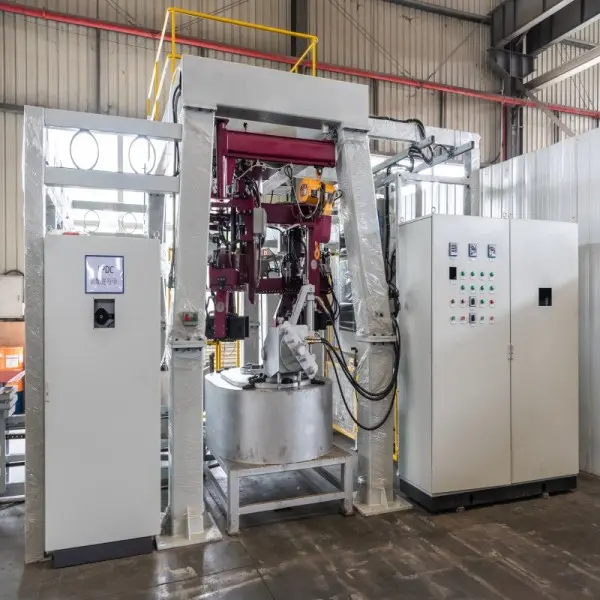
What Is Low Pressure Casting?
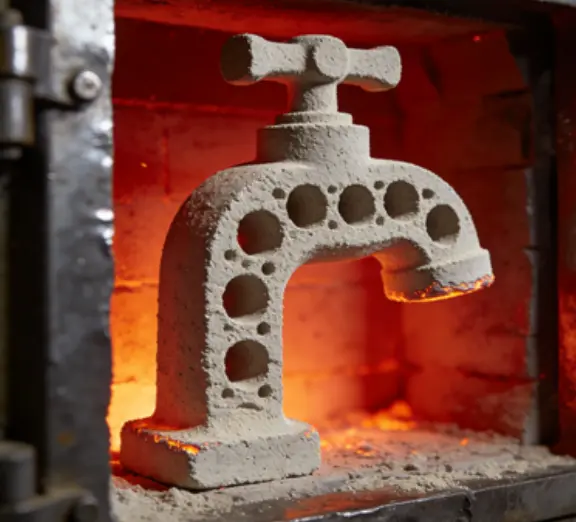
Low Pressure Casting has become one of the most important and reliable manufacturing technologies in the brass sanitary ware and water-meter industries. From brass faucet bodies to brass valve housings and water meter shells, low pressure casting delivers higher quality, better consistency, and safer product performance compared with traditional gravity casting.
If you are planning to improve your brass casting quality or build a new faucet production line, understanding low pressure casting will help you make the right technical decisions.
This article provides a complete, easy-to-understand explanation of low pressure casting—what it is, how it works, why it is essential for brass products, and how it benefits manufacturers.
1. What Is Low Pressure Casting?
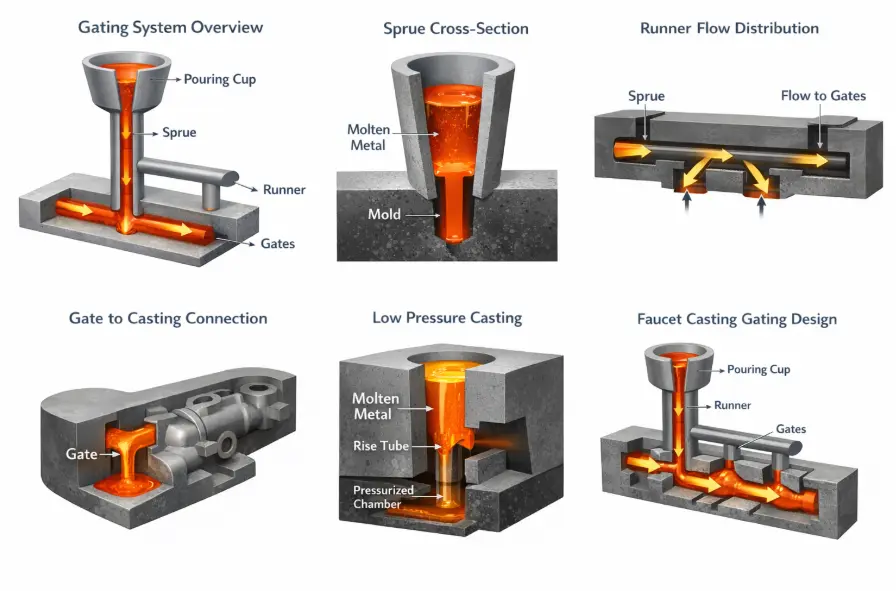
Low pressure casting is a metal casting process in which controlled low air pressure is applied to push molten metal from a sealed furnace upward into a metal mold.
The typical working pressure ranges from 0.02 MPa to 0.06 MPa.
Unlike gravity casting, where molten metal simply falls into the mold, low pressure casting uses pressure to ensure a smooth, stable, and uniform filling process.
Key Features of Low Pressure Casting
Bottom-to-top mold filling
Better flow control
Minimal turbulence or oxidation
Excellent surface finish
Higher density and fewer defects
Suitable for complex shapes
Highly repeatable and stable
Because of these benefits, low pressure casting is now the preferred method for high-precision brass casting.
2.Why Low Pressure Casting Is Ideal for Brass Faucet Manufacturing
Brass faucets contain complex internal channels, thin walls, and pressure-bearing structures. These features require a casting method that can deliver:
✔ High density
✔ Low porosity
✔ Smooth surface
✔ Stable dimensional accuracy
Low pressure casting meets all these requirements.
Benefits of low pressure casting for brass faucets
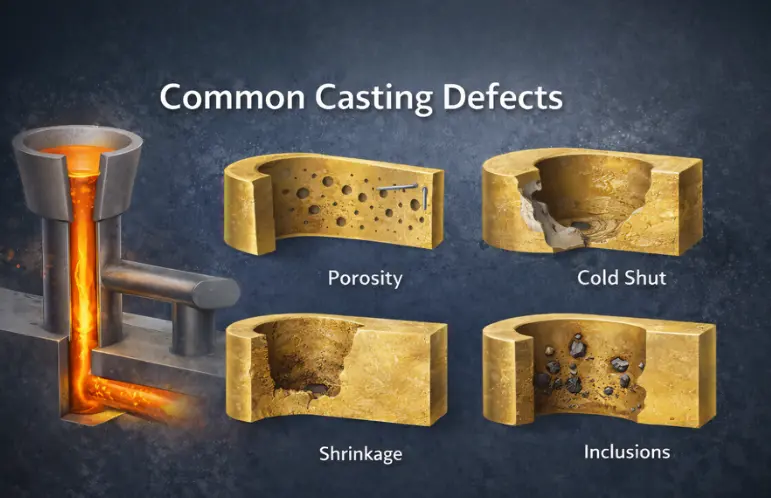
Fewer casting defects such as porosity, shrinkage, and cold shuts
Higher strength due to better metal compactness
Improved waterway accuracy inside the faucet body
Better surface finish suitable for polishing and electroplating
Higher yield rate and less material waste
Suitable for modern faucet shapes including complex and curved designs
For these reasons, almost all high-quality brass faucet factories worldwide have switched from gravity casting to low pressure casting.
3.Low Pressure Castingvs Gravity Casting: What’s the Difference?
| Casting Method | Low Pressure Casting | Gravity Casting |
| Metal Flow | Controlled upward flow | Free fall |
| Turbulence | Very low | High |
| Porosity | Minimal | Common |
| Surface Finish | Smooth, clean | Rougher |
| Mold Filling | Stable and uniform | Uncontrolled |
| Suitability | Best for complex faucet bodies | Suitable for simple shapes |
| Yield Rate | High | Medium |
| Cost | Medium-High | Medium |
Conclusion:If your products include high-end faucets, accurate water meter shells, or pressure-bearing brass parts, LPDC provides significantly better quality and fewer defects.
4.How Does Low Pressure Casting Work?
Below is the standard workflow used in brass faucet and valve casting:
Step 1: Brass Melting
Brass ingots are melted in a furnace at approximately 1000°C and kept in a fully molten state.
Step 2: Sealing and Pressurization
The furnace is sealed, and nitrogen gas is introduced to apply low pressure.
This pressure pushes molten brass upward through the riser tube.
Step 3: Bottom-Up Mold Filling
Molten brass enters the mold from the bottom, reducing turbulence, oxidation, and gas inclusion.
This bottom-up approach ensures:
·Smooth filling
·No splashing
·No air entrapment
·Better directional solidification
Step 4: Cooling and Solidification
The brass cools inside the metal mold.
Cooling speed can be precisely controlled to improve the density and mechanical properties of the final casting.
Step 5: Mold Opening & Demolding
The solidified brass casting—such as a faucet body—is removed from the mold.
Step 6: Gate Cutting & Deburring
The casting is cleaned, gates are cut, and the part proceeds to:
·Grinding
·Polishing
·Machining
·Surface treatment (e.g., chrome plating)
5.What Brass Products Are Best Made Using Low Pressure Casting?
Low Pressure Casting is ideal for products requiring high strength, complex internal geometry, or a premium surface finish, including:
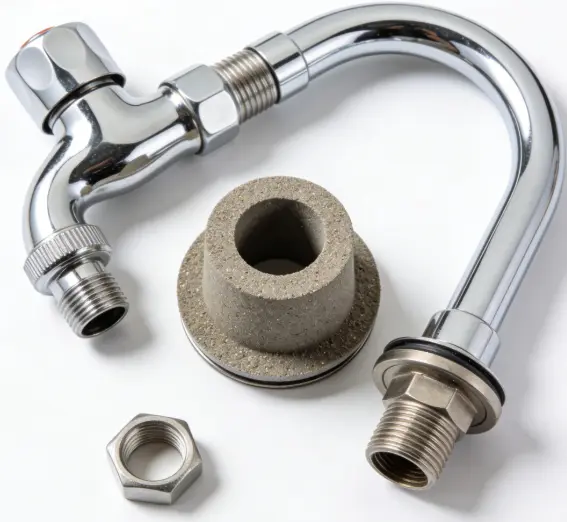
✔ Brass faucet bodies
✔ Brass valve bodies
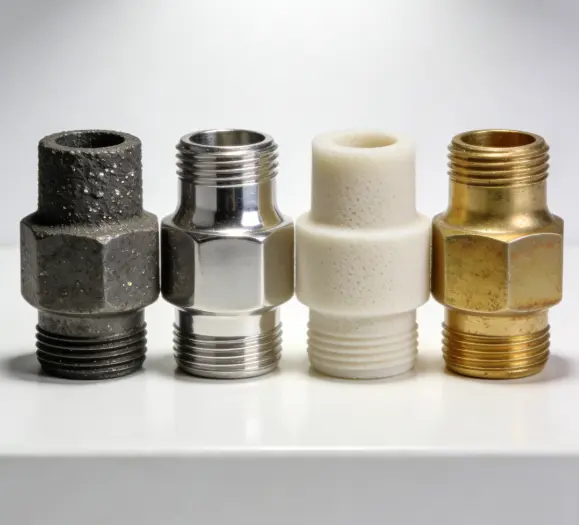
✔ Brass water meter shells
✔ Brass pipe fittings
✔ Sanitary ware components
✔ Precision plumbing parts
If a brass part must be leak-proof, accurate, durable, and visually appealing, LPDC is the best casting solution.
6.Technical Advantages of Low Pressure Casting for Brass Industries
If a brass part must be leak-proof, accurate, durable, and visually appealing, Low Pressure Casting is the best casting solution:
1.Excellent Mechanical Properties
Low pressure casting produces castings with:
·Higher density
·Better uniformity
·Fewer shrinkage cavities
This is essential for faucet and valve manufacturers.
2.Superior Surface Quality
Low pressure casting castings show:
·Smooth surfaces
·Reduced oxidation
·Lower finishing costs
This significantly improves polishing efficiency.
3.Ideal for Complex Channels
Many faucet bodies have:
·Internal waterways
·Thin-wall structures
·Curved geometries
Low pressure casting provides better filling for these designs.
4.High Automation Compatibility
Low pressure casting machines can connect with:
·Robot polishing systems
·Sand core shooting machines
·CNC machining centers
·Automated trimming and cooling systems
This supports full factory automation.
7.Why Brass Faucet Factories Choose Low Pressure CastingToday
Here are the real reasons Low Pressure Casting is replacing old casting methods:
✔ Lower defect rate
Many factories report defect reduction from 10% → 1%.
✔ More consistent quality
Suitable for mass production and brand premium products.
✔ Higher output
Stable filling leads to faster cycle times.
✔ Reduced labor cost
One machine can run with minimal manual intervention.
✔ Better compatibility with modern automation
Ideal for smart manufacturing upgrades
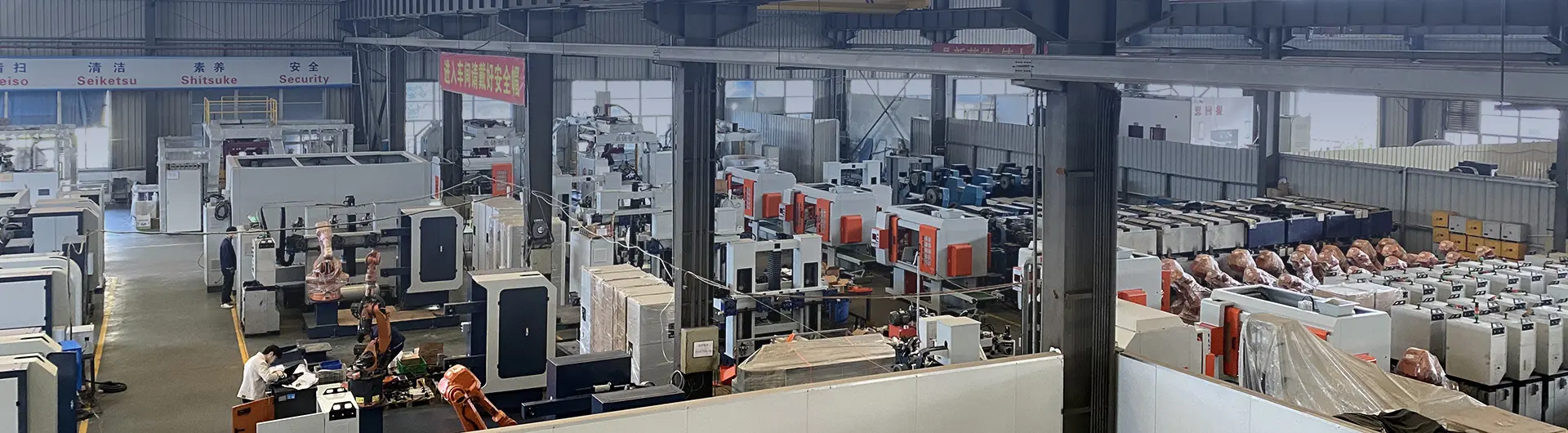
8.How Xiamen DingZhuSupports Brass Faucet Production
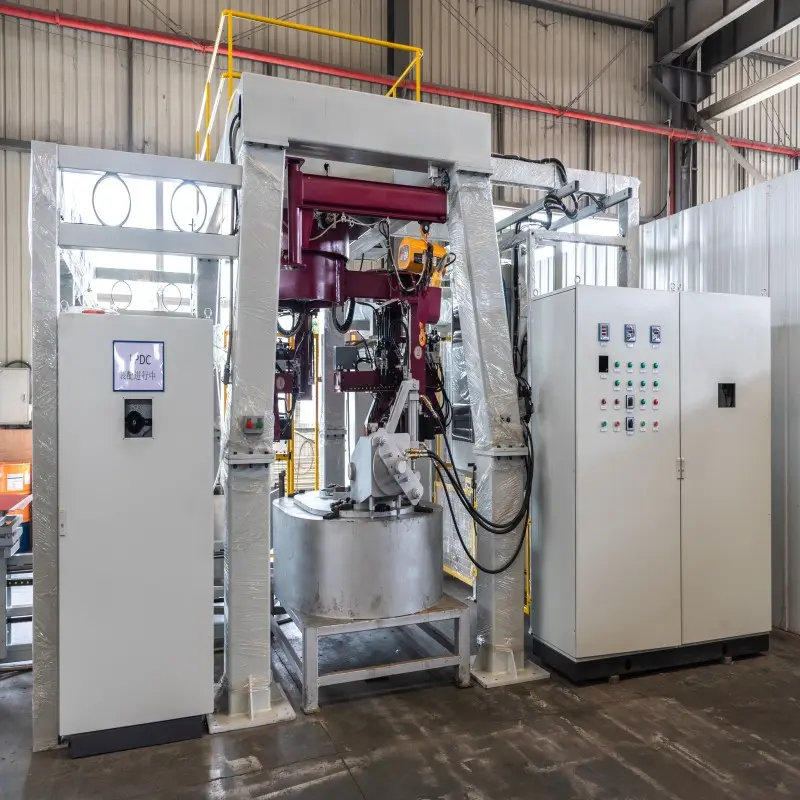
As a professional manufacturer of brass casting equipment, DingZhu provides complete low pressure casting solutions for faucet and valve factories.
Our Low Pressure Casting Machine Advantages:
1.Optimized for brass materials only
2.Energy-saving brass melting furnace
3.Fully automated pressure and filling control
4.Durable, long-life casting molds
5.Compatibility with polishing robots and machining centers
6.Intelligent monitoring system
7.Stable performance for production
We not only supply machines—we also provide turnkey solutions for full faucet production.
9.One-Stop Faucet Manufacturing Line (Turnkey Solution)
DingZhu can design and supply the complete production line:
✔ Low pressure casting machines
✔ Gravity casting machines
✔ Sand core shooting machines
✔ Polishing & grinding robots
✔ CNC polishing machines
✔ Machining centers
✔ Full process layout design
From casting → deburring → polishing → machining → finishing
We help customers build a modern, efficient, and automated factory
10.Conclusion: Low Pressure Casting Is the Future of Brass Casting
Low Pressure Casting has become the global standard for producing high-quality brass faucets, valves, and water meter bodies. Its advantages—including smoother filling, fewer defects, better surface quality, and automation compatibility—make it an essential technology for manufacturers aiming for stable quality and long-term competitiveness.
If your company wants to upgrade faucet production capacity or build a new brass casting line, LPDC is the most reliable and future-ready solution.